 English
  Tiếng Việt
 1. Quy Định Quốc Tế Về Tần Số Vệ Tinh
1.1. Liên Minh Viễn Thông Quốc Tế (ITU)
The ITU manages the allocation of frequencies and satellite orbits globally based on the principle “first come, first served” (First Come, First Served). Starlink must register frequencies and orbits with the ITU and resolve disputes if conflicts arise.
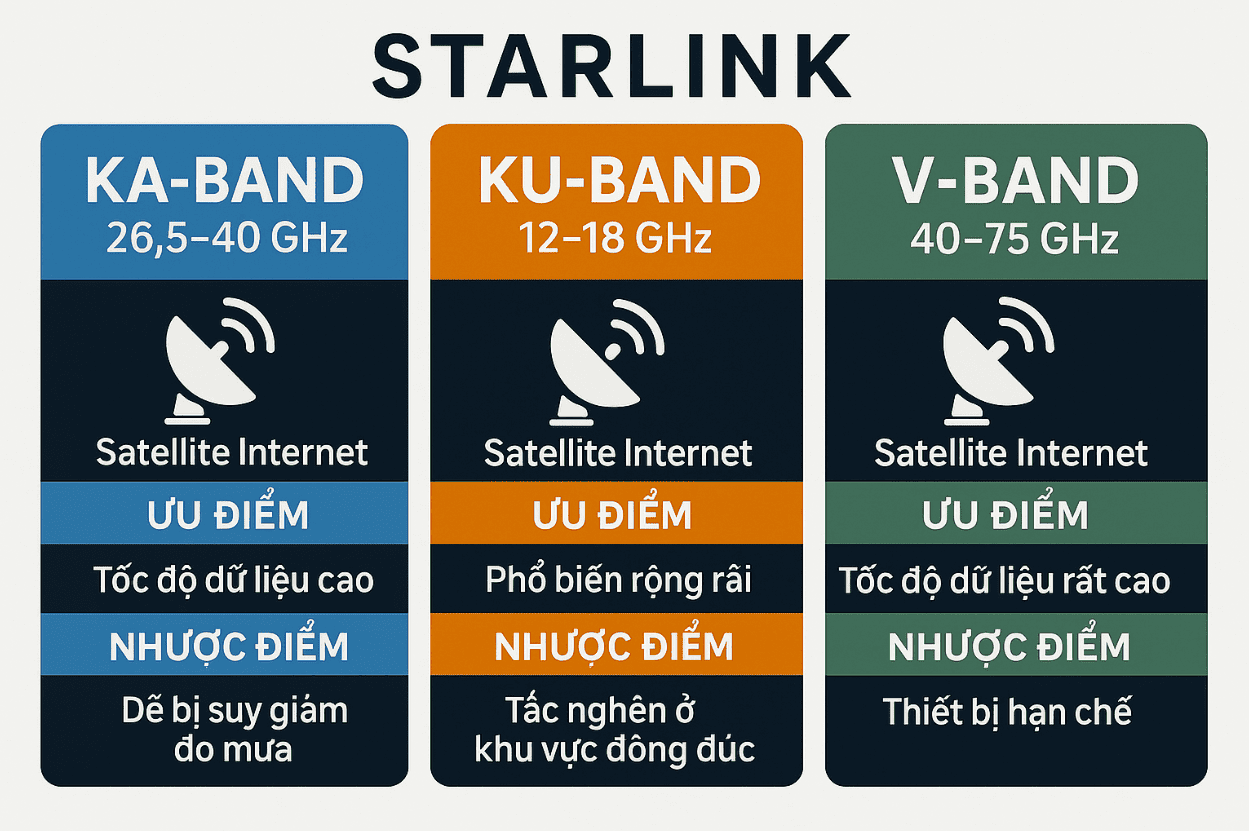
Starlink's Main Frequency Bands:
Type Frequency Range Purpose Ka-band 26.5–40 GHz High-speed data transmission Ku-band 12–18 GHz End-user connectivity V-band 40–75 GHz Ultra-high speed testing 
Direct-to-Cell: Uses the band LTE (800–2000 MHz) to connect directly to regular phones, without needing special hardware.
1.2. Hiệp Ước Vũ Trụ 1967
The treaty stipulates that outer space must be used for peaceful purposes, prohibiting the deployment of nuclear weapons. Countries are responsible for the activities of their organizations/individuals in space, including SpaceX.
2. Công Nghệ Quản Lý Tần Số Của Starlink
2.1. Tối Ưu Hóa Băng Thông Và Giảm Nhiễu
Beamforming: Phased array antennas adjust signal direction, focusing on areas with high demand.
Frequency reuse: Each narrow beam uses the same frequency in different geographical areas, increasing spectrum efficiency.
Inter-satellite laser: Transmits data between satellites at speeds of 100 Gbps, reducing reliance on ground stations.
2.2. Phân Bổ Tần Số Theo Khu Vực
Europe & North America: Prioritize Ka-band (37.5–42.5 GHz) for high-speed.
Asia – Pacific: Combine Ku-band (14–14.5 GHz) for complex terrain coverage.
3. Triển Khai Tại Việt Nam: Yêu Cầu Pháp Lý Về Tần Số
3.1. Quyết Định 659/QĐ-TTg (2025)
Vietnam grants pilot license to Starlink with conditions:
Build Gateway station in Da Nang: Control domestic data traffic, ensure network security.
Limit of 600,000 subscribers: Prioritize remote areas, islands, to conclude before 2031.
- Đang tải sản phẩm...
Comply with Cybersecurity Law: Store user data in Vietnam, cooperate with authorities in preventing cyber attacks.
3.2. Phân Bổ Tần Số Cụ Thể
Ka/Ku band: Licensed for high-speed connection, avoid interference with 5G network (3.5 GHz).
Direct-to-Cell: Expected deployment from 2027, using LTE 1.8 GHz band.
4. Thách Thức Khi Triển Khai
4.1. Cạnh Tranh Tần Số Với Đối Thủ
Amazon Kuiper and OneWeb: Both targeting the 28 GHz band, causing conflicts in the Southeast Asia region.
Solution: ITU encourages dynamic spectrum sharing (Dynamic Spectrum Sharing) and data compression technology.
4.2. Rác Vũ Trụ Và Giải Pháp
34,400 Starlink satellites expected to occupy 75% of artificial objects in orbit, increasing collision risk.
Self-destruct technology: Gen2 satellites use argon engines to self-decompose within 6 months instead of 5 years.
5. Xu Hướng Tương Lai: Direct-to-Cell Và AI
5.1. Kết Nối Di Động Trực Tiếp
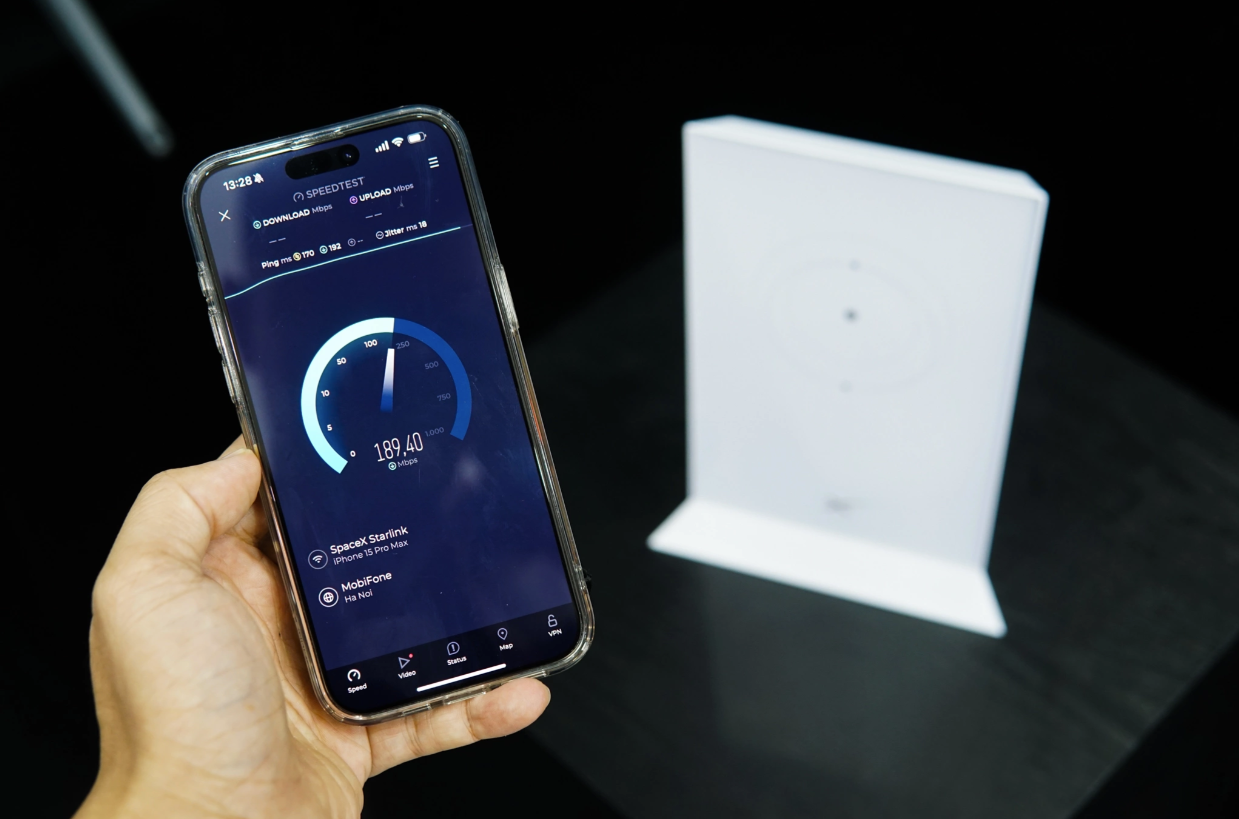
Direct-to-Cell: Allows regular 4G/5G phones to receive messages and make emergency calls via satellite. Expected to have global coverage by 2027.
Partnership with carriers: T-Mobile (USA), Rogers (Canada), and Viettel (Vietnam) integrate Starlink into the mobile core network.
5.2. AI Trong Quản Lý Tần Số
Traffic forecasting: AI analyzes usage data to adjust satellite positions, maintaining speed50–220 Mbps.
Automatic collision avoidance: Performs50,000 avoidance maneuvers/year, reducing risk by 80% compared to the old system.
Câu Hỏi Thường Gặp (FAQ)
Q1: Does Starlink interfere with ground equipment?
A: It can occur if frequencies are not allocated properly. Starlink uses beamforming and frequency reuse to minimize interference.
Q2: Why does Starlink need to build a Gateway station in Vietnam?
A:To comply with local data storage laws and traffic control according to Decision 659/QĐ-TTg.
Q3:How does Direct-to-Cell work?
A:Starlink transmits LTE signals via satellite, allowing regular phones to connect without special hardware.
Kết Luận
Frequency and spectrum regulations are key factors for Starlink to operate effectively, especially in Vietnam – where there are strict requirements for security and deep area coverage. With AI technology and Direct-to-Cell, Starlink promises to usher in an era ofborderless Internet, but it needs to balance innovation with compliance with global regulations.